
Atlas: When Nobody Had an Answer
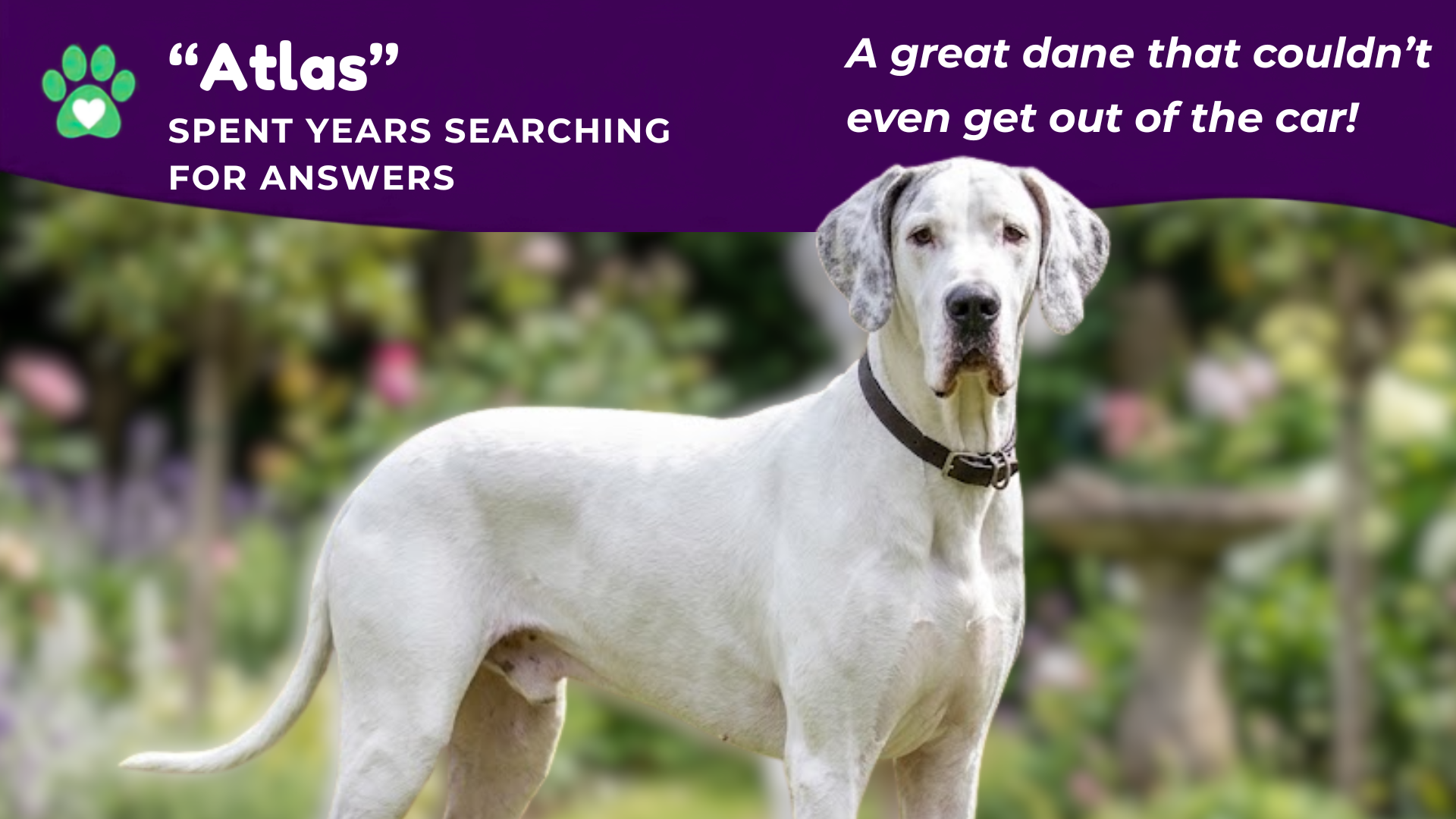
Atlas was a four-year-old Great Dane whose condition had been slowly worsening for years. His owners had done everything they knew to do. Multiple veterinary evaluations had been performed. Radiographs had been taken at one year of age, again at two years of age, and again as an adult. Despite extensive investigation, no one could provide a clear explanation for why Atlas continued losing mobility.
By the time he arrived for chiropractic evaluation, his condition had deteriorated to the point that he could barely move. Getting him to the appointment was a challenge in itself. In fact, he was unable to comfortably exit the vehicle, requiring the examination and adjustment to begin from the back of the car. A detailed neurological examination revealed significant abnormalities, including facial asymmetry, altered proprioception, gait dysfunction, and postural changes. These findings suggested that the problem involved more than simple orthopedic disease.
A specific chiropractic adjustment was performed.
The initial response was encouraging.
Two weeks later, Atlas returned for reevaluation. While challenges remained, improvements in mobility and function were evident. A month later, a house call was performed because transportation remained difficult for the family. Atlas continued to improve despite the severity of his condition. Unfortunately, the story did not end as hoped. His owners continued feeding a dry food diet despite recommendations to address broader health concerns. Eventually Atlas developed bloat, one of the most serious emergencies affecting giant-breed dogs, and he passed away.
Although his life was cut short, Atlas’ story remains important. It demonstrates the value of looking beyond symptoms and focusing on function. Even when a diagnosis remains uncertain, improving nervous system function can create meaningful improvements in quality of life. For Atlas and his family, every improvement mattered.
Healthy nerves. Healthy movement. Healthy animals.